Queensland is reviewing its State Planning Policy, proposing changes to how environmental protection, housing, infrastructure and economic development are addressed through the planning system. For developers, government agencies and environmental professionals, understanding these proposed changes will be important for future planning and project assessment.
The State Planning Policy (SPP) is a key component of Queensland's planning framework. It identifies matters of state interest that must be considered in land use planning and helps guide the preparation of local planning instruments and relevant development assessment processes.
The current State Planning Policy was released in 2017. The Queensland Government released a draft revised policy for public consultation between 28 August and 26 October 2026. The draft is now under review, and the final policy has not yet been released.
What is changing?
The proposed State Planning Policy introduces a revised structure intended to improve clarity, reduce duplication and better coordinate state planning priorities.
Six strategic aspirations have been proposed to guide planning outcomes, including housing supply, efficient land use, regional productivity, infrastructure delivery and economic development.
A significant proposed change is the introduction of a new state interest titled Environment, Heritage and Efficient Growth. This brings together several environmental and heritage planning considerations within a broader framework intended to support coordinated development while protecting important environmental values.
Other changes include revised policies for natural hazards, housing, energy infrastructure and water management, as well as a proposed relocation of certain development assessment benchmarks into the Planning Regulation 2017.
Biodiversity protection remains a key planning consideration
The draft policy retains an emphasis on protecting matters of environmental significance while seeking to accommodate Queensland's development needs. Proposed biodiversity outcomes include:
- Identifying matters of environmental significance during land use planning.
- Locating and designing development to avoid adverse environmental impacts, including cumulative impacts.
- Mitigating adverse impacts that cannot be avoided.
- Encouraging restoration and rehabilitation of important environmental values.
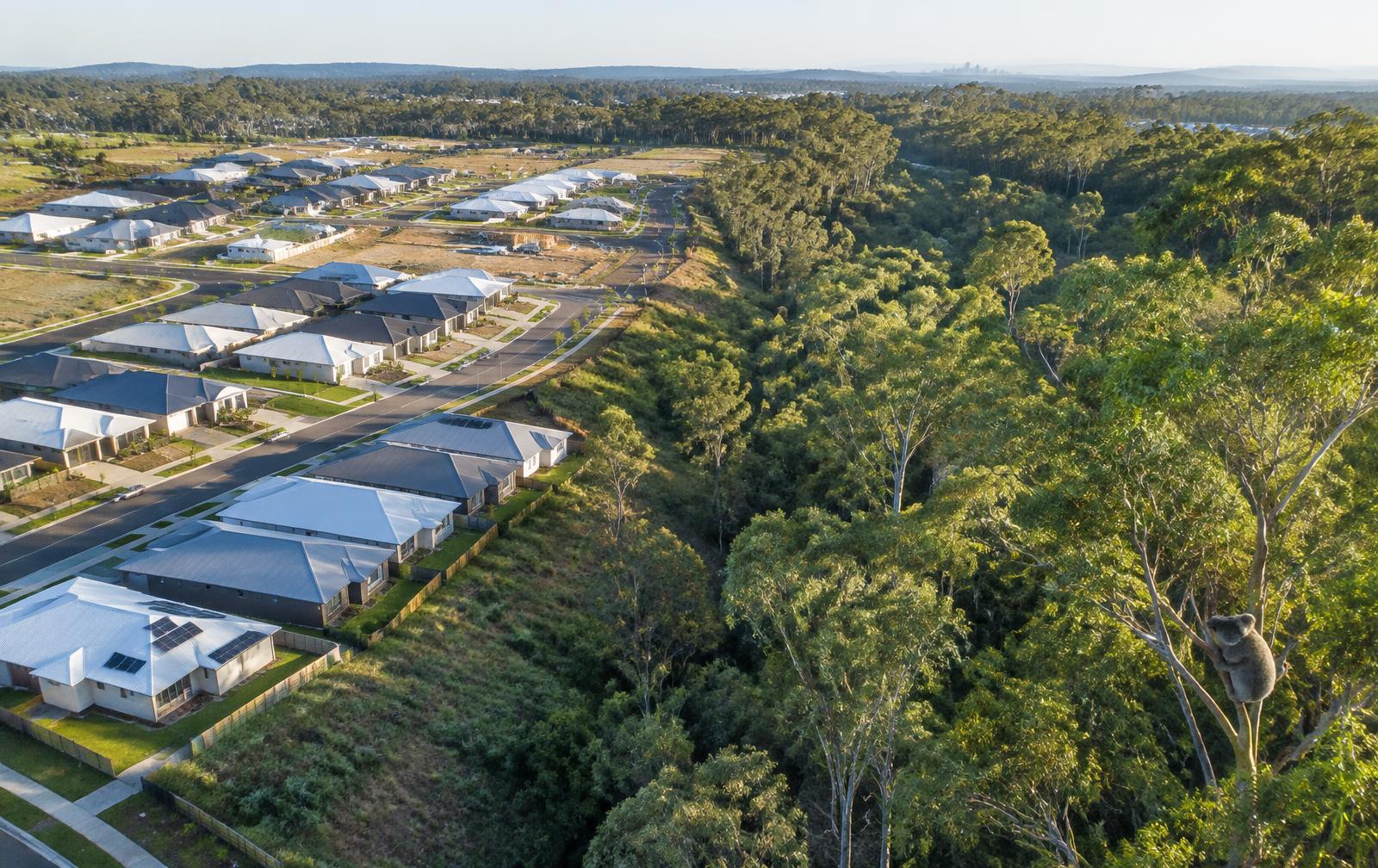
- Supporting viable koala populations in South East Queensland through habitat conservation.
These provisions reinforce the importance of considering environmental constraints at a strategic planning and project design stage.
For developers, this means ecological assessments and environmental mapping should continue to inform development feasibility, site layout and infrastructure planning.
What does this mean for koala habitat?
Koala habitat conservation remains an important element of the draft policy. The proposed Environment, Heritage and Efficient Growth state interest includes support for maintaining viable koala populations in South East Queensland.
Habitat connectivity, vegetation retention and the cumulative effects of development are important considerations when planning growth in areas supporting koala habitat.
However, the draft State Planning Policy should not be confused with the specific development assessment requirements applying under Queensland's existing koala protection framework. Those requirements must continue to be considered under the relevant planning legislation, mapping and development assessment provisions.
Natural hazards and environmental planning
The draft policy also proposes changes to planning for natural hazards and resilience. A revised Natural Hazards and Safety state interest places greater emphasis on assessing whether risks to people, property and infrastructure can be managed to an acceptable or tolerable level.
This has implications for development in areas affected by bushfire, flooding, coastal erosion and other hazards.
Importantly, natural hazard management can intersect with biodiversity conservation. For example, development design may need to consider both bushfire protection requirements and the retention of ecologically significant vegetation.
Early integration of environmental and hazard assessments can help project teams identify these competing considerations and develop suitable design responses.
How does the draft policy align with Commonwealth environmental reforms?
The proposed Queensland framework and the Commonwealth environmental reforms share several broad principles. Both recognise the importance of early environmental assessment, avoiding impacts on significant environmental values and supporting environmental restoration.
However, there are important differences. The Commonwealth reforms introduce legally enforceable National Environmental Standards for certain assessment and approval decisions, including new requirements relating to environmental offsets and net gain.
Queensland's draft State Planning Policy primarily guides state interests in land use planning. It does not itself establish the same Commonwealth net-gain test.
The interaction between state planning policies, local planning schemes and Commonwealth environmental approval requirements will therefore remain important for projects that may trigger multiple regulatory frameworks.
What should project proponents be considering?
Although the revised State Planning Policy has not yet been finalised, the draft highlights the continuing importance of integrating environmental considerations into early project planning.
For developers and infrastructure providers, this includes:
- Reviewing environmental constraints and state planning interests during site feasibility investigations.
- Considering threatened species habitat, vegetation, waterways and ecological connectivity when designing projects.
- Identifying natural hazard risks and potential interactions with environmental protection requirements.
- Understanding how proposed planning changes may influence future local planning schemes and assessment processes.
- Monitoring the final State Planning Policy and any transitional arrangements following its release.
Project proponents should continue to assess development requirements against the planning instruments and legislation currently in force.
How Green Tape Solutions can help
Green Tape Solutions provides environmental planning, ecological assessment and regulatory advice to support development across Queensland.
Our team works with developers, government agencies, infrastructure providers and multidisciplinary project teams to identify environmental constraints, interpret relevant environmental requirements and develop practical solutions.
With experience in biodiversity assessment, koala habitat management, vegetation investigations, environmental impact assessment and planning approvals, we help clients understand the environmental implications of development proposals and navigate complex regulatory processes.
As Queensland's planning framework evolves, early environmental advice can support informed decisions, effective project design and responsible development outcomes.
Further information
- Queensland Government – State Planning Policy and Draft Review
- Queensland Planning Legislation
- Australian Government – Environment Protection Reforms
Information current as at 28 October 2026. The revised State Planning Policy remains a draft and is subject to change before finalisation